Showing posts with label bar. Show all posts

Friday, 5 April 2013

Functions in a bar

The Joke

All the function are gathered in a bar, drinking, chatting and relaxing. Suddenly, the $x^2$ function enters the bar shouting with scare

- Run, run quickly, derivatives are coming and they are angry.

Then the exponential function, $e^x$ stands up, makes a step and says proudly

- Let them come, I am not afraid!


Background
When a derivative acts on function it usually changes the function's form. For example the derivative of the polynomial function decreases its order, e.g. $d/dx (x^n) = n x^{n-1}$, where $n$ is integer, but the result is valid for non-polynomial functions ($n$ real) too. Other common derivatives regard the $sin x$ and $cos x$ functions, where $d/dx (sin x) = cos x$ and $d/dx (cos x) = - sin x $.

The only exception is the exponential function $e^x$ whose derivatives always give the exponential function again, i.e. $d/dx (e^x) = e^x$.


Thursday, 21 March 2013

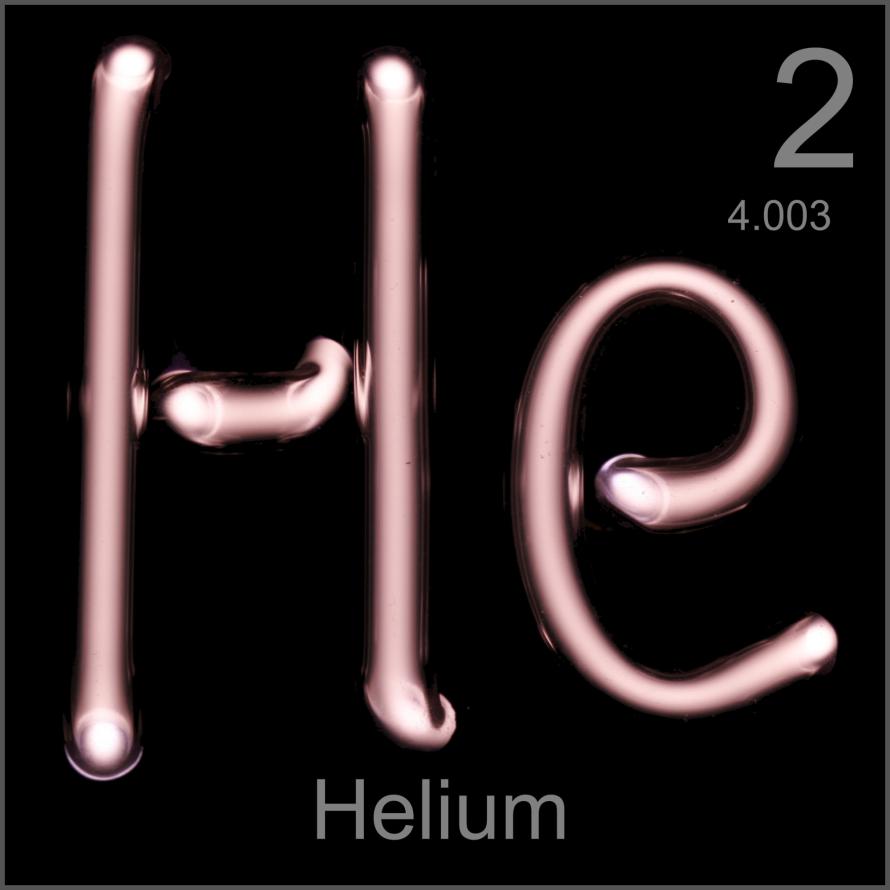
A helium walks into a bar

The Joke

Helium walks into a bar and orders a beer.

The bartender says “We don’t serve noble gases in here.”

The Helium doesn’t react.


Background

Helium is one of the the least reactive elements in nature, because it is a noble gas. The properties of the noble gases can be well explained by modern theories of atomic structure: their outer shell of valence (outer) electrons is considered to be "full", giving them little tendency to participate in chemical reactions.

Sunday, 24 February 2013

Schrodinger's car in a bar (?)


The Joke


Schrodinger’s cat walks into a bar and doesn't.

Background

Look at the background session here


Friday, 22 February 2013

A neutrino walks into a bar

The Joke

A neutrino walks into a bar. The bartender says 

- We don't serve neutrinos in here.

The neutrino then replies

- I was just passing though.


A neutrino walks into a bar. He orders a double whisky, drinks it quickly and asks 

- How much for the bill?

The barman then says,

- For you, no charge!


Background
Neutrino is an elementary sub-atomic particle which has two properties

  1.  is electrically neutral, or in other words it has no charge . (an example of a charged particles is the electron)
  2. is weakly interacting with the other particles of the standard model. Because it hardly interacts with other particles, neutrinos can pass through without "stopping" them. For example about 65 billion neutrinos (emanated from the Sun) pass through the earth every second in a square centimetre without interacting with anything else.


Monday, 4 February 2013

Tachyon leaves a bar


A tachyon leaves the bar.

The bartender says
- We don't serve tachyons here!!

A tachyon enters a bar.


Background

Tachyon is the hypothetical particle that moves faster than the speed of light. The term "tachyon" comes from the Greek word "ταχύς" which means fast or rapid. We underline that this particle is hypothetical and was introduced to describe states with negative mass squared.

According to Special Relativity theory of Albert Einstein, there is an upper bound in the speed in nature and no particle can move faster than this value. This bound is the speed of light, i.e. the speed that light travels through space-time. Particles with no mass travel at the speed of light and massive particles travel with lower speeds. The heaviest a particle is the lower its maximum speed is.


However tachyon has negative mass and this would imply that it could travel faster than the speed of light. But, what are the implications of this fact? According to special relativity any information that could travel faster than the speed of light violates the principal of causality. The latter refers to the statement that every effect has a cause and they are connected in a causal relation. In other words the effect presupposes the cause.

To understand this better let us imagine the following thought experiment. Alice and Bob are two very good friends. They have agreed that every time Bob thinks of Alice he should send her a message and then Alice is happy. So the event Alice is happy presupposes Bob has sent a message. So the cause is the message due to Bob. This is all true because no message (information) can be sent faster than the speed of light. However let us consider that the information "Bob thinks Alice" travel faster than light (faster than the message), then Alice would be happy without Bob sending her a message, in other words without any cause. Simply, Alice would be happy without receiving any statement of love from Bob.
(Comment for the experts: Bob and Alice have a more complicated quantum love-life; they appear to be entangled and their love is a "spooky action at a distance").

Therefore breaking causality would lead to paradoxes like going back on time and killing your own grandfather. (Then who would have given birth to your father and so on?). In other words traveling with speed greater than the speed of light implies that events have no causal connection and thus a tachyon could first leave the bar, then be insulted by the barman and finally go into the bar. QED.

Sunday, 20 January 2013

Infinite mathematicians enter a bar

The Joke

Infinite number of mathematicians enter a bar.


The barman asks:
-Hi all, what can I bring for you?

The first mathematician orders a beer,
the second says: - Half beer for me.
The third mathematician says: - Half of what the previous guy ordered.
The fourth: - Half of the previous
The fifth: -Half of the previous, too.
and so on...

Barman (really upset): -Stop it, idiots

and serves them two beers!!


Background

The joke exploits the notion of convergence. For example, imagine that we sum $1+2+3+...$ till infinity. (In mathematical compact notation it is written as $\sum_{n=1}^{\infty} n$).
Obviously this sum becomes bigger and bigger and gets infinity; in mathematics we say that "the sum diverges".

However, say we sum $1+\frac{1}{2}+\frac{1}{4}+\frac{1}{8}+...$ till infinity, in other words we add a term which is the half of the previous one till infinity (what the mathematicians did ordering beers). In compact notation we would write $\sum_{n=0}^{\infty}(\frac{1}{2} )^n$

Now we observe (with the assistance of a calculator) that this sum does not grow incredibly fast, but rather approaches a number. This is the number 2, and every time you add a new "half of the previous" you get even closer to the value of two. In scientific jargon, this notion of approaching a finite number is called, convergence, and the sum is convergent.

Is the number half a special number? Do other series converge to finite numbers? The answer is yes and the relative concept is the convergence of the geometric series. For any number $r$ between $-1$ and $1$, the series

$\sum_{n=0}^{\infty} r^n = \frac{1}{1-r}$,

which is called the geometric series, is always convergent to the number $\frac{1}{1-r}$. To convince yourself that the formula works try the case where $r=1/2$ and you will find the value of $2$.

Did you like the notion of convergence and geometric series? For more information check out:
http://en.wikipedia.org/wiki/Geometric_series
http://mathworld.wolfram.com/GeometricSeries.html